What are the Best Examples of Paraphrasing?
6 min read

As we walk into modern homes or offices, we are surrounded by interiors made with MDF sheets. From kitchen cabinets to the decorative hallway panels, Medium Density Fibreboard (MDF) has become one of the most popular materials in interior designing.
Many people don't fully understand what MDF is or how it differs from conventional wood, despite its widespread use. Is it strong enough for shelving? Can you use it in a bathroom? Is it just "cheap wood"? If you are planning a renovation or a DIY project, understanding the properties of MDF sheets can save you time, money, and frustration.
Today we’ll discuss exactly what MDF sheets are, how many types are available, and how to choose the right board for your next project.
What is Medium Density Fiberboard (MDF)?
MDF is an engineered wood product made by breaking down hardwood or softwood residuals into wood fibers. These fibers are combined with wax and a resin binder, then subjected to high temperature and pressure to form durable panels.
Unlike solid wood, which has a grain pattern and knots, MDF is uniform throughout. This consistency is achieved through its manufacturing process. The result is a dense, flat, and stiff panel that has no natural grain, making it incredibly easy to machine, cut, and paint.
The density of MDF typically ranges from 600 kg/m³ to 800 kg/m³, which is generally denser than plywood and particle board. This density gives it a solid feel and a smooth surface that is ideal for veneering or painting.
How many types of MDF sheets are there?
Not all MDF is created equal. Depending on your specific needs, you might require a specialized type of board.
Standard MDF Sheet
This is the most common form, typically light brown in color. It is designed for interior use in dry conditions. It serves as an excellent substrate for veneers and laminates but should be kept away from water.
Textured MDF
Textured MDF features decorative, three-dimensional patterns on its surface, making it ideal for adding visual interest to walls, cabinetry, furniture, and interior doors. It combines the durability and easy workability of standard MDF with built-in designs, eliminating the need for extra surface treatments. Textured MDF offers consistent quality, a wide range of patterns, and easily accepts paint, providing a stylish and practical option for modern interiors.
Moisture-Resistant (MR MDF)
Often recognizable by a green tint in the core, MR MDF is manufactured with a moisture-repellent resin. While it isn't waterproof, it stands up much better to high humidity than standard MDF. It’s the preferred choice for bathroom vanities, laundry cupboards, and kitchen environments.
Exterior Grade MDF
For outdoor projects, standard MDF will swell and disintegrate. Exterior-grade MDF is made using advanced resins and technologies that resist moisture, rot, and fungal decay, making it suitable for non-structural outdoor applications like signage or shop fronts.
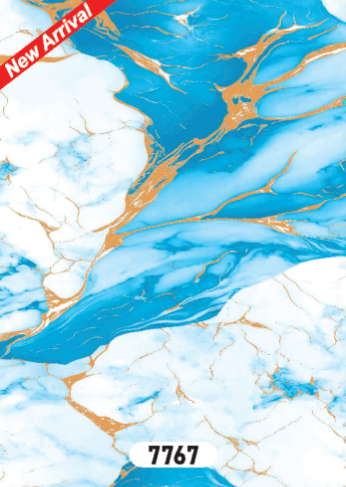
UV laminated sheet
To save time on finishing, you can purchase UV laminated MDF sheets that already feature a high-gloss decorative layer. These can range from solid colors to realistic wood grains, ready to be cut and assembled into furniture.
Common Sizes & Thickness
MDF sheets are manufactured in large dimensions to minimize waste during production. The most common standard sheet size is 8 ft. x 4 ft. (2440 mm x 1220 mm). However, larger sheets are available for industrial use.
Thickness options are plentiful, allowing for versatility across different projects:
- Thin (2 mm - 6 mm): Used for drawer bottoms, cabinet backs, and curved surfaces.
- Medium (9 mm - 15 mm): Ideal for wall paneling, decorative cladding, and baseboards.
- Thick (18 mm - 25 mm): The standard for cabinetry, shelving, wardrobes, and tabletops where rigidity is required.
- Extra Thick (30 mm+): Used for specialized architectural details and heavy-duty work surfaces.
Most suppliers can also cut sheets to custom sizes, which helps if you don't have the tools to transport or cut full 8x4 panels.
Where can MDF sheets be used?
Because of its smooth surface and consistent structure, MDF has a massive range of applications.
Furniture Manufacturing
Its affordability and smooth finish make it the primary material for flat-pack furniture. It holds veneers beautifully, allowing for high-end looks at a fraction of the cost of solid wood.
Cabinets & Wardrobes
The stability of 18mm MDF makes it perfect for cabinet carcasses and wardrobe doors. Since it doesn't warp like solid wood, doors stay straight and close properly year after year.
Interior Wall Panels
MDF is easily machined. This makes it the go-to material for wainscoting, tongue-and-groove paneling, and decorative wall features.
Decorative & CNC Designs
Because MDF has no grain, it can be routed, carved, and cut into intricate shapes without chipping or splintering. CNC machines can create complex 3D patterns on MDF surfaces for decorative grilles and architectural features.
Why choose MDF over solid wood?
Smooth Surface: No knots or grain means it paints beautifully. You can achieve a glass-like finish with the right preparation.
- Cost-Effective: It is significantly cheaper than plywood and solid wood.
- Easy to Work With: It cuts easily with standard tools and sands down to a very smooth edge.
- Consistency: Every sheet is exactly the same strength and thickness, with no voids or internal gaps.
- Eco-Friendly: Many MDF boards are made from recycled wood fibers and sawmill byproducts, reducing the need to cut down new trees.
What are the disadvantages?
While versatile, MDF isn't perfect for every situation.
Moisture Sensitivity: Standard MDF acts like a sponge. If water penetrates the surface or edges, it will swell and cannot be repaired.
Screw Holding: MDF has lower screw-holding ability compared to solid wood or plywood. Screws can strip easily if over-tightened, and you must always pilot drill first.
Heavy Weight: It is dense and heavy, which makes large sheets difficult to handle alone.
Dust: Cutting MDF creates a very fine dust containing urea-formaldehyde, which can be harmful if inhaled. Always wear a mask and cut in a well-ventilated area.
MDF vs. Plywood vs. Particle Board
Choosing between these three depends largely on your budget and structural needs.
MDF: Best for painted applications, detailed machining, and indoor furniture. It is smoother than plywood but heavier and less water-resistant.
Plywood: Made from layers of wood veneer glued together. It is stronger and lighter than MDF and holds screws better. It is the superior choice for structural work and environments that might get wet.
Particle Board (Chipboard): Made from larger wood chips. It is the cheapest option but also the weakest and has a rough surface. It is mostly used for low-cost furniture carcasses that will be covered with laminate.
Frequently Asked Questions (FAQs)
Is MDF sheet waterproof?
No. Standard MDF is highly susceptible to water damage. Even "moisture-resistant" MDF is not waterproof—it simply withstands humidity better. For direct water contact, avoid MDF.
Can MDF sheets be used outdoors?
Only specialized exterior-grade MDF can be used outdoors. Standard MDF will swell, warp, and fall apart if exposed to rain.
Is MDF safe for home interiors?
Yes, but cutting it releases formaldehyde gas and dust. Once sealed with paint or laminate, the emissions are negligible and safe for homes. Look for "low-formaldehyde" or E1/E0 grade boards if you are concerned.
How long do MDF sheets last?
In a dry environment and when properly sealed, MDF furniture and paneling can last for decades.
What are the Best Examples of Paraphrasing?
As we walk into modern homes or offices, we are surrounded by interiors made with MDF sheets. From kitchen cabinets...
6 min read

How to create a PEEL Paragraph Writing Strategy?
By learning the PEEL strategy, a professional looking to improve communication skills can greatly improve their writing. By giving students...
1 min read
What is an Executive Summary?
It is a concise and comprehensive overview that highlights the most important points of a larger document. An executive summary...
1 min read